Operations panels · 2026
DAT TMS
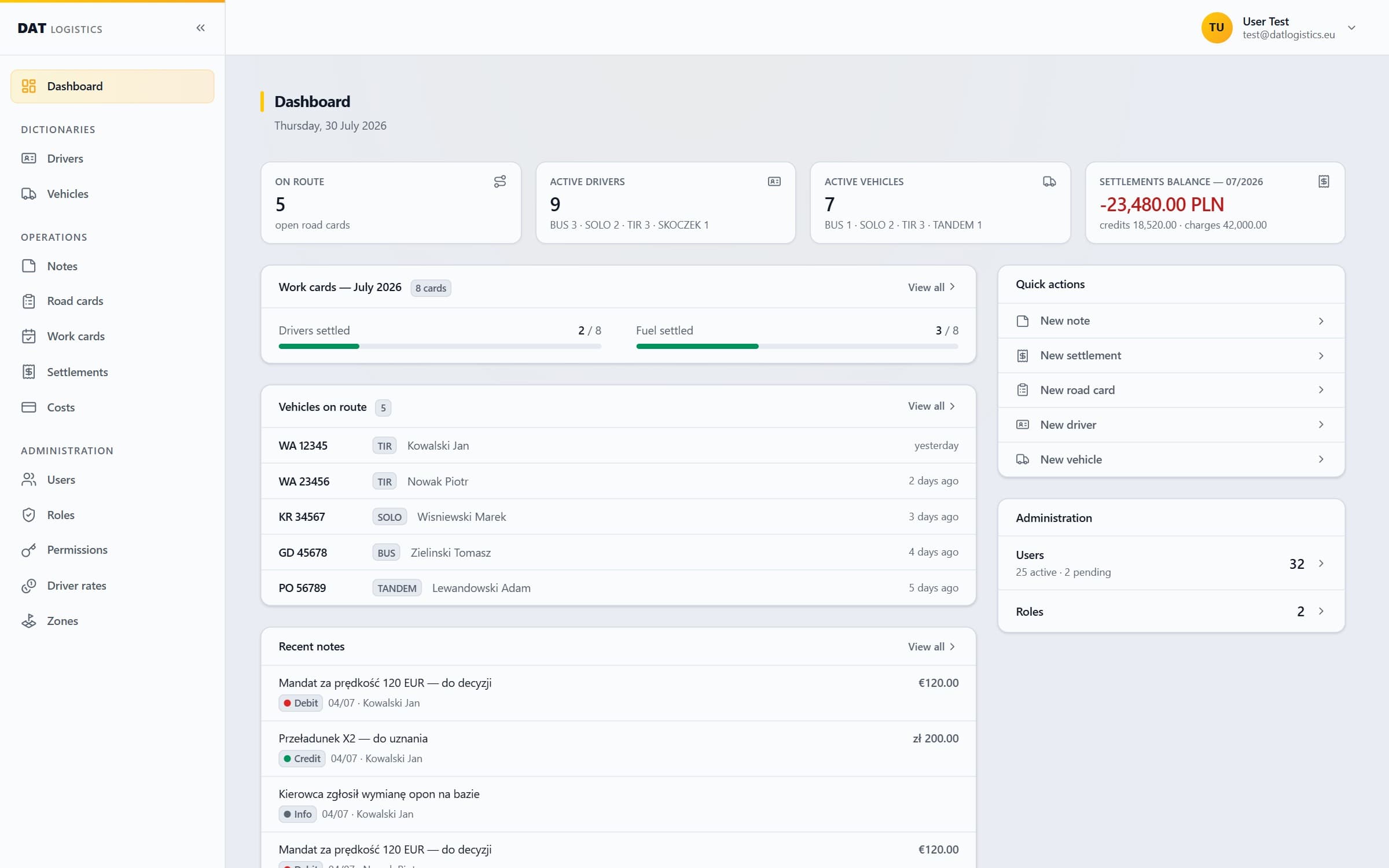
A transport company's whole day — drivers, vehicles, work cards, settlements — in one panel.
DAT Logistics runs fleets, drivers and settlements across spreadsheets and habit. We are building the internal system that replaces all of it: nine modules, three languages, and a test gate that refuses to ship anything less than fully covered.
Client
DAT Logistics
Status
In staged delivery — v0.41.0
Role
Scope & system design · Full frontend build · Design system · CI/CD & releases
The numbers.
Every figure here lives in a repository.
- 100%
- test coverage on all four metrics — CI blocks anything less
- 6,019 / 6,019
- statements covered · 4,417 branches · 2,265 functions
- 1,110
- commits · 41 released versions · conventional commits
- 3,844
- test cases across 372 test files
- 16
- feature modules · 60+ code-split routes
- 3
- languages — 23 translation namespaces each
The brief.
A transport company's operations live in many places at once: dispatch decisions, driver work cards, road cards, fuelings, tolls, costs, settlements. Every copy drifts. DAT needed one panel that holds the day together — and settlement rules encoded exactly, not approximately.
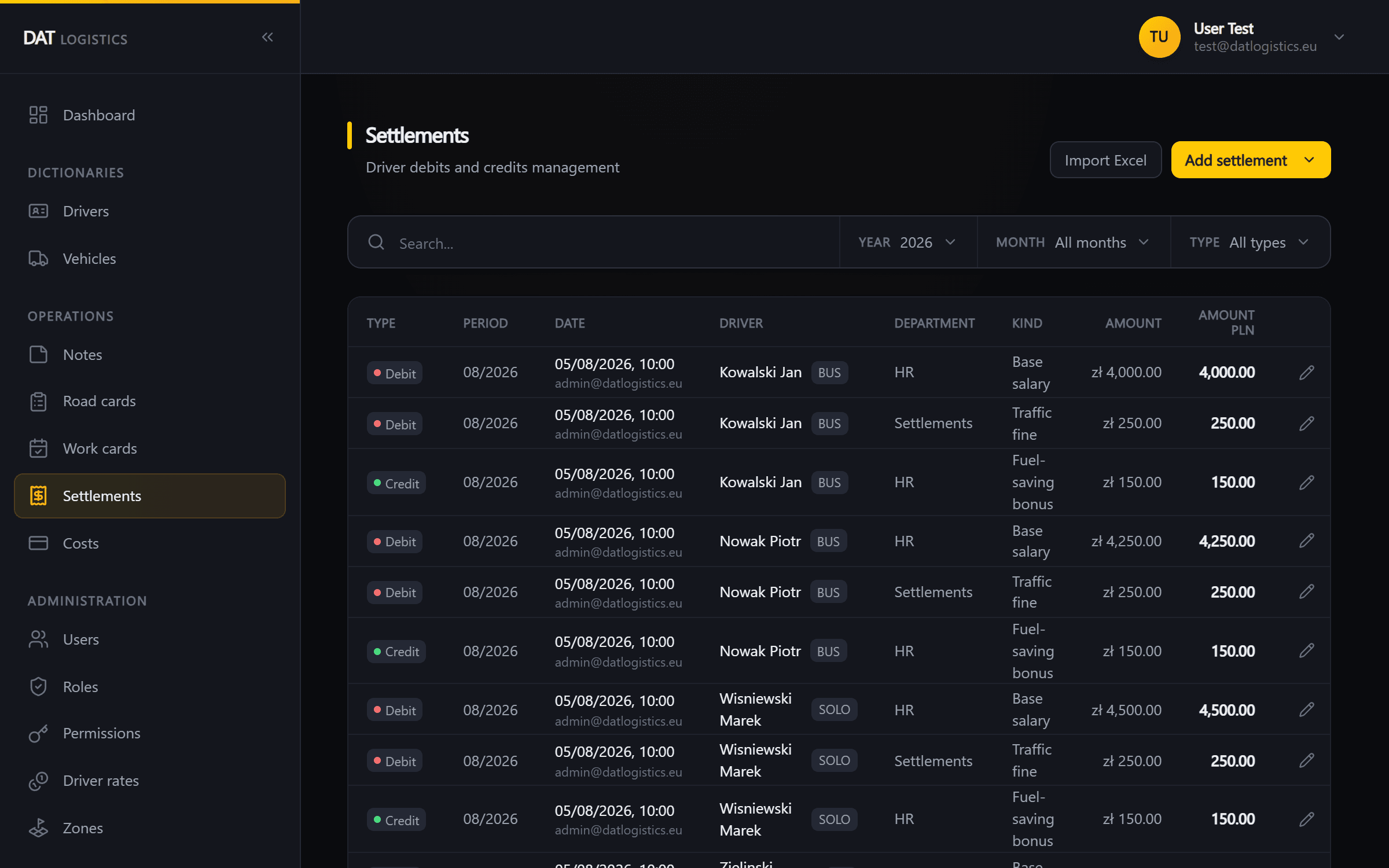
The settlement engine is the heart: per-day rates by vehicle class (BUS, SOLO, TIR, TANDEM), half-day thresholds, B2B supplements and automatic charges — the rules a payroll argument ends with.
What we built.
Shown as it really renders — no mockups.
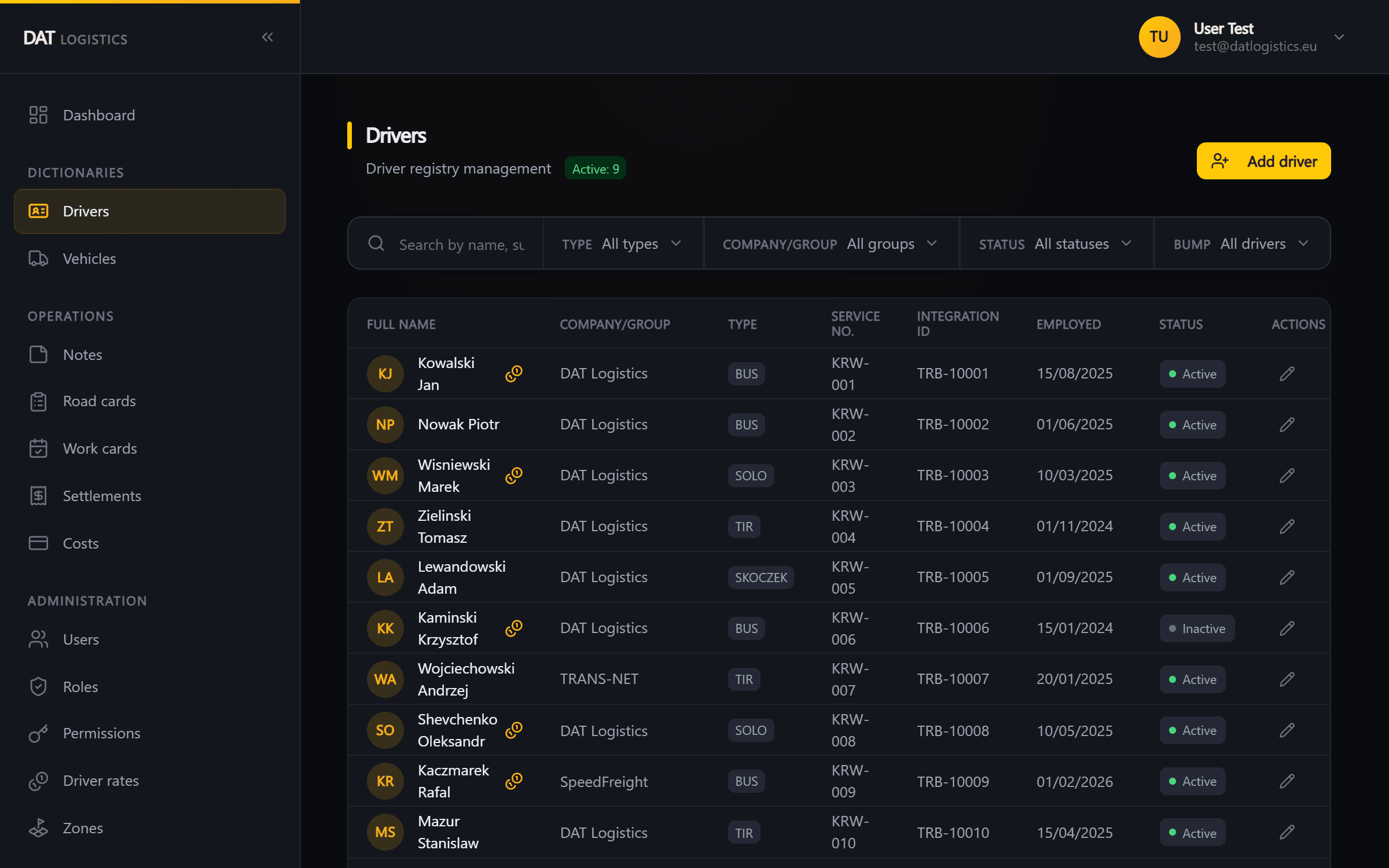
Nine operational modules
Driver and vehicle registers, work cards, road cards, global settlements, fuelings, costs, notes and files — each a full list-detail workflow with audit history.
Settlement engine
Day-rate logic per vehicle class with half-day thresholds and supplements, encoded once and tested exhaustively — 100% branch coverage is the point, not the trophy.
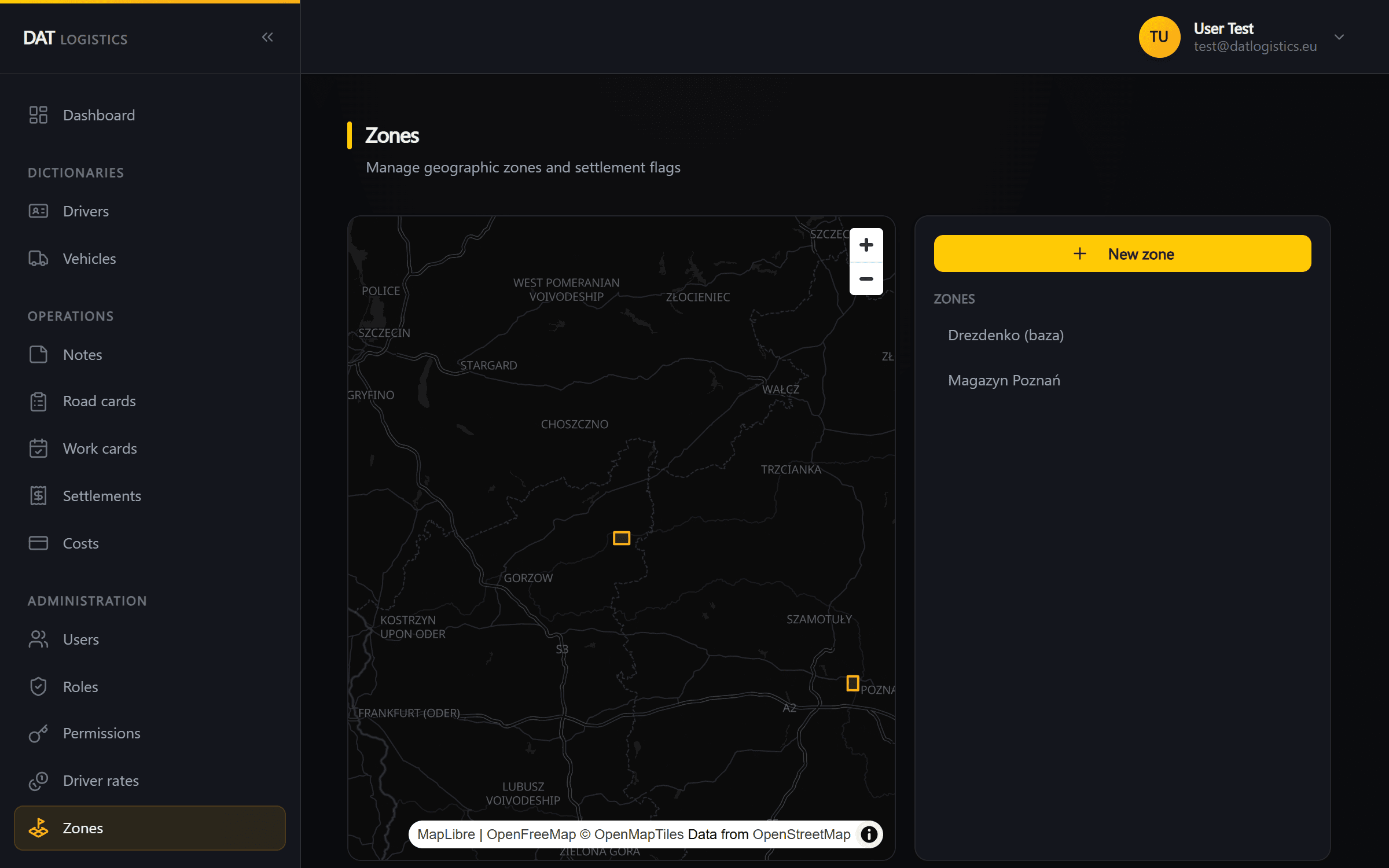
Zones on a live map
MapLibre GL with terra-draw polygon editing for operational zones — drawn, saved and enforced in the same panel.
RBAC that scales
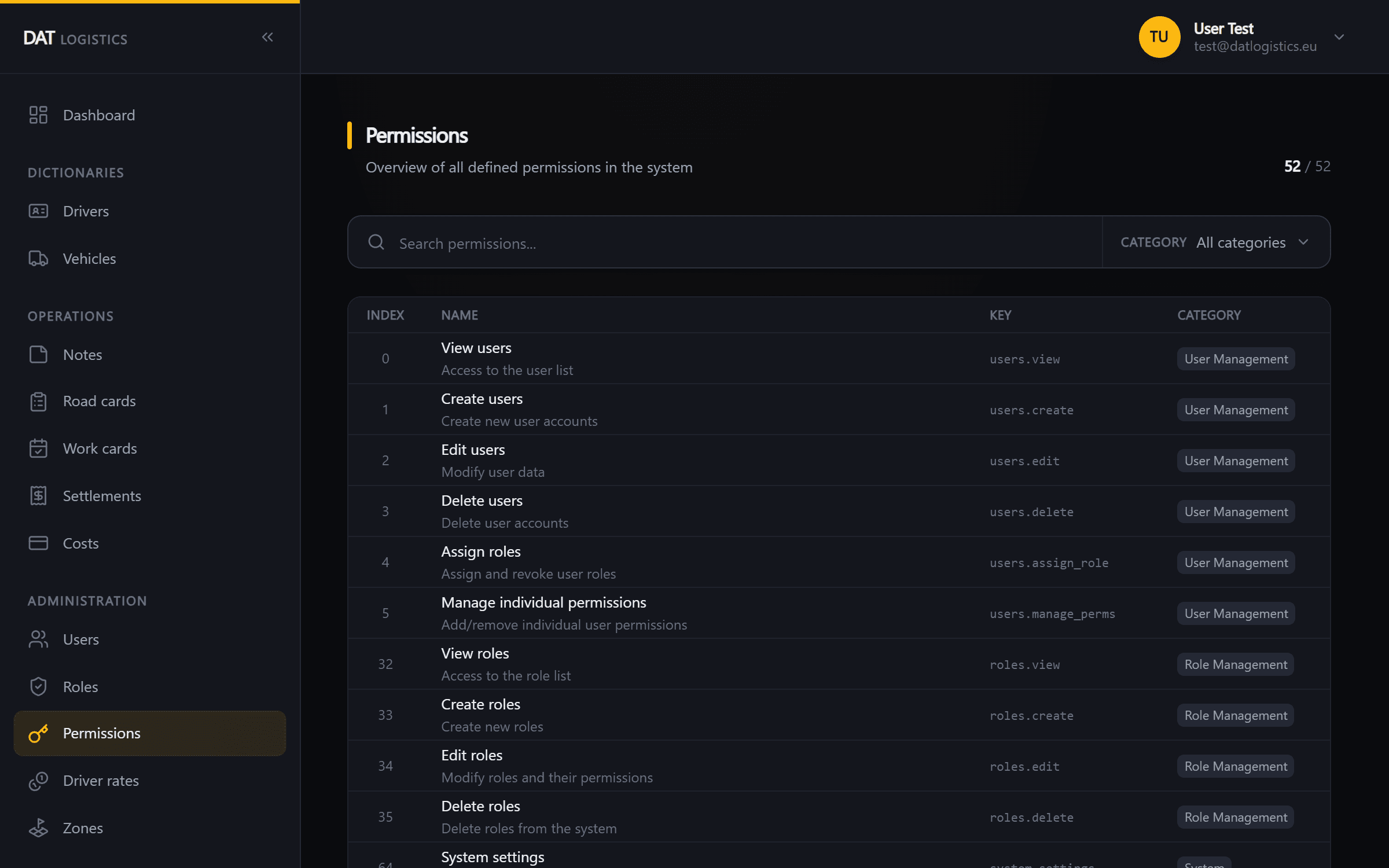
A bitflag permission engine with granular per-module rights, so the owner decides who sees settlements and who only files fuelings.
More of the work.
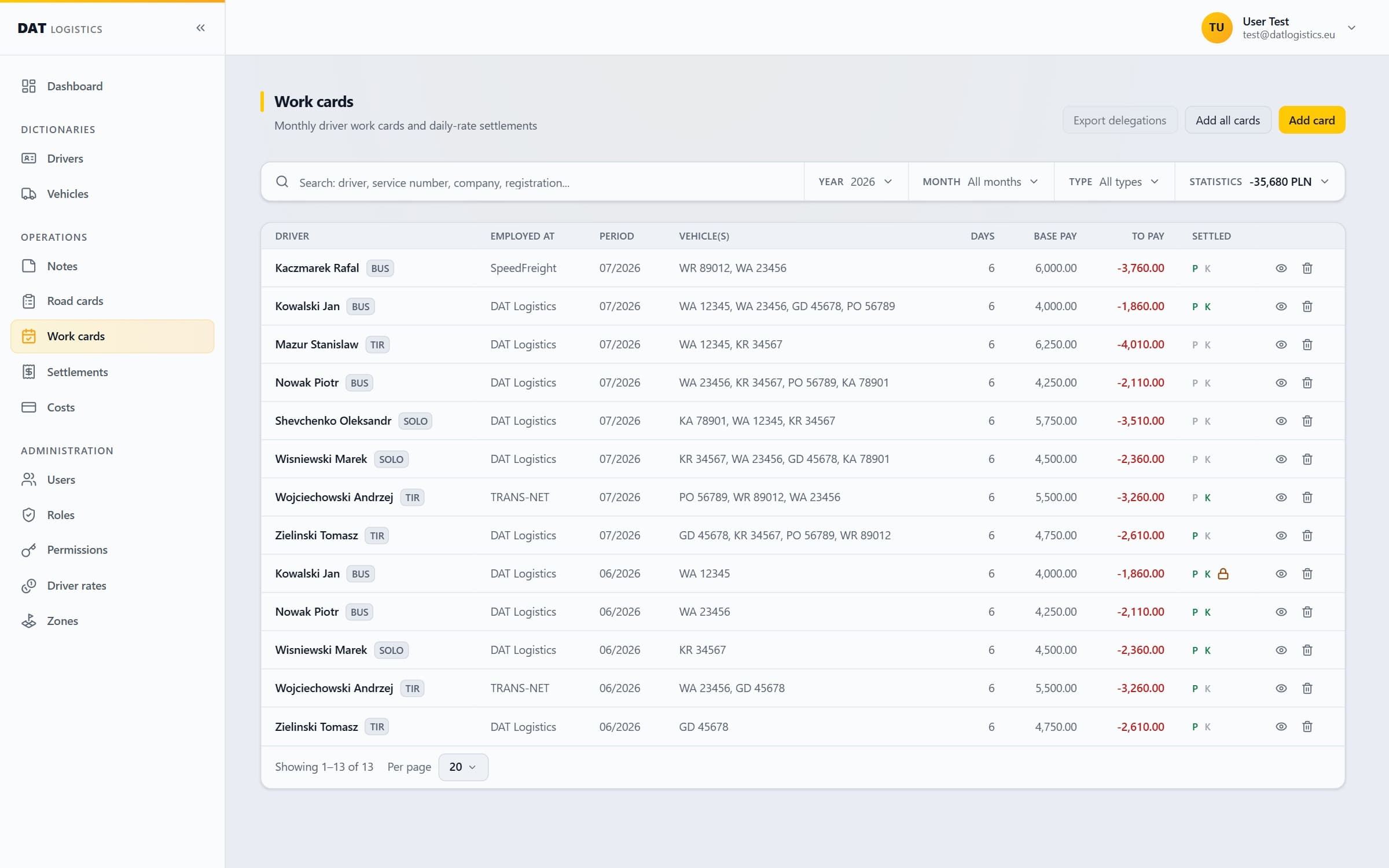
Work cards — monthly settlement view with per-day entries
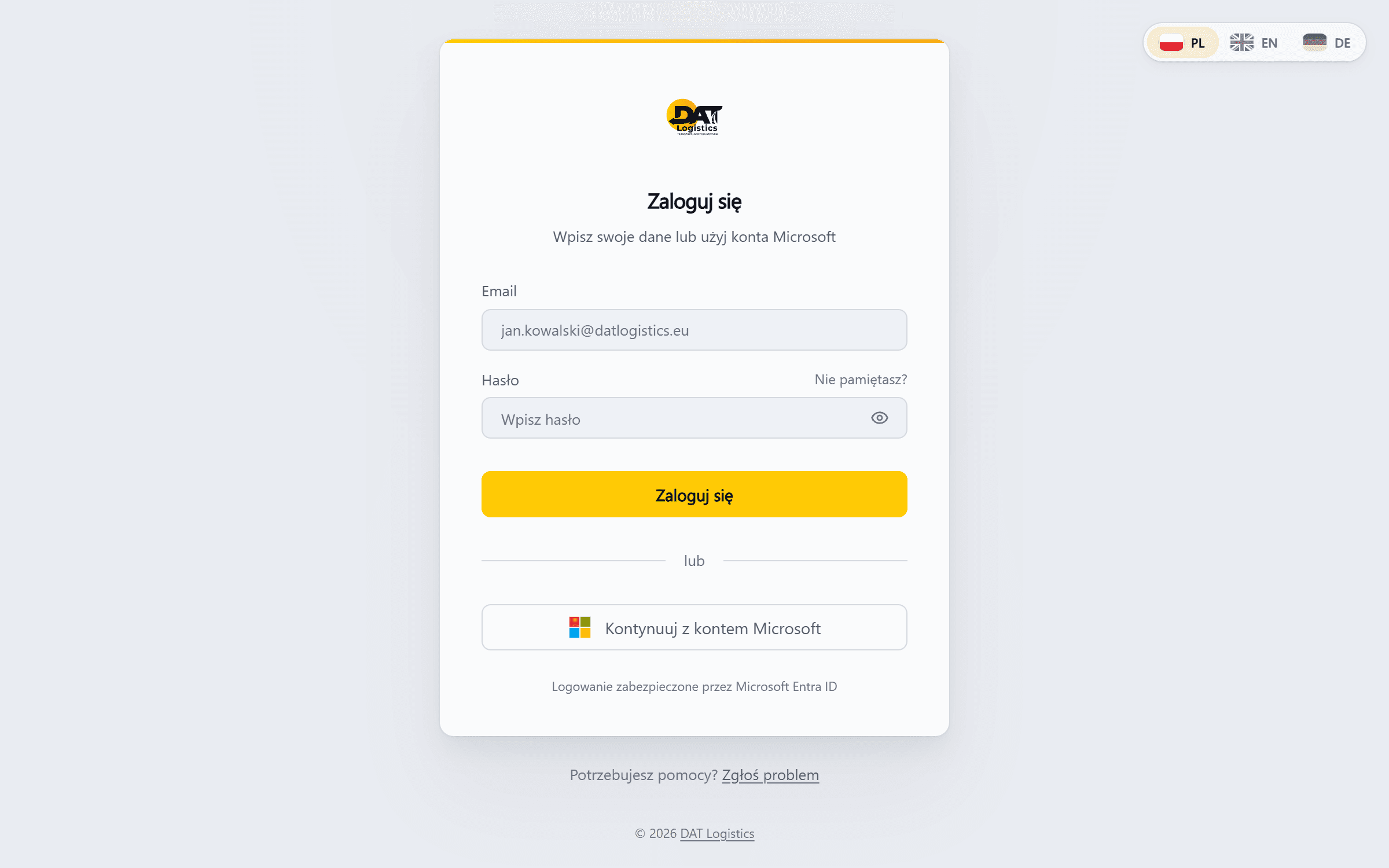
Login in the light theme — PL · EN · DE switcher and Microsoft Entra ID sign-in
Role
- Scope & system design
- Full frontend build
- Design system
- CI/CD & releases
Stack
- React 19
- TypeScript strict
- Vite (Rolldown)
- TanStack Router · Query · Table
- Tailwind CSS 4
- MapLibre GL + terra-draw
- i18next · PL / EN / DE
- Vitest · MSW
- Docker · release-please
Worth knowing
- The CI pipeline lint-checks, cross-checks translations against the backend repo, typechecks, tests and builds on every push — and the 100% coverage thresholds are enforced in vitest config, so the gate cannot drift.
- Releases ship through release-please with conventional commits: 41 versioned releases with human-readable changelogs so far.
- Code is proprietary to the engagement; the client's brand assets appear here with the work.