Operations panels · 2026
Panel Mastwell
Warehouse, clients, invoices and waybills — with conflicts that end in an audit trail, not an argument.
Mastwell equips professional workshops. Their panel takes the DAT architecture and slims it to what a trading company needs: stock, reservations, invoices, waybills — built to be roughly eight times leaner to maintain, without lowering the engineering bar.
Client
Mastwell — workshop equipment
Status
In build — frontend complete on mocked API
Role
System design · Full frontend build · RBAC & auth flows · Design system
The numbers.
Every figure here lives in a repository.
- 8
- domain modules — warehouse, clients, invoices, waybills, users, roles, settings, auth
- 24
- granular RBAC permissions — 6 modules × 4 actions
- 2FA
- QR enrollment, httpOnly session, BFF pattern — no tokens in the browser
- ~8×
- leaner maintenance target vs. the full TMS architecture it descends from
- 13
- approved design specs, each with its implementation plan
- 133
- commits · CI: lint, typecheck, test, build on every push
The brief.
Not every company needs the full weight of a TMS. Mastwell needed the same discipline — typed forms, permissions, auditability — at a size a trading company can own and afford to maintain.
So we cloned our proven architecture and cut deliberately: no i18n, no telemetry stack, no release automation. What stayed is the part that protects the business.
What we built.
Shown as it really renders — no mockups.
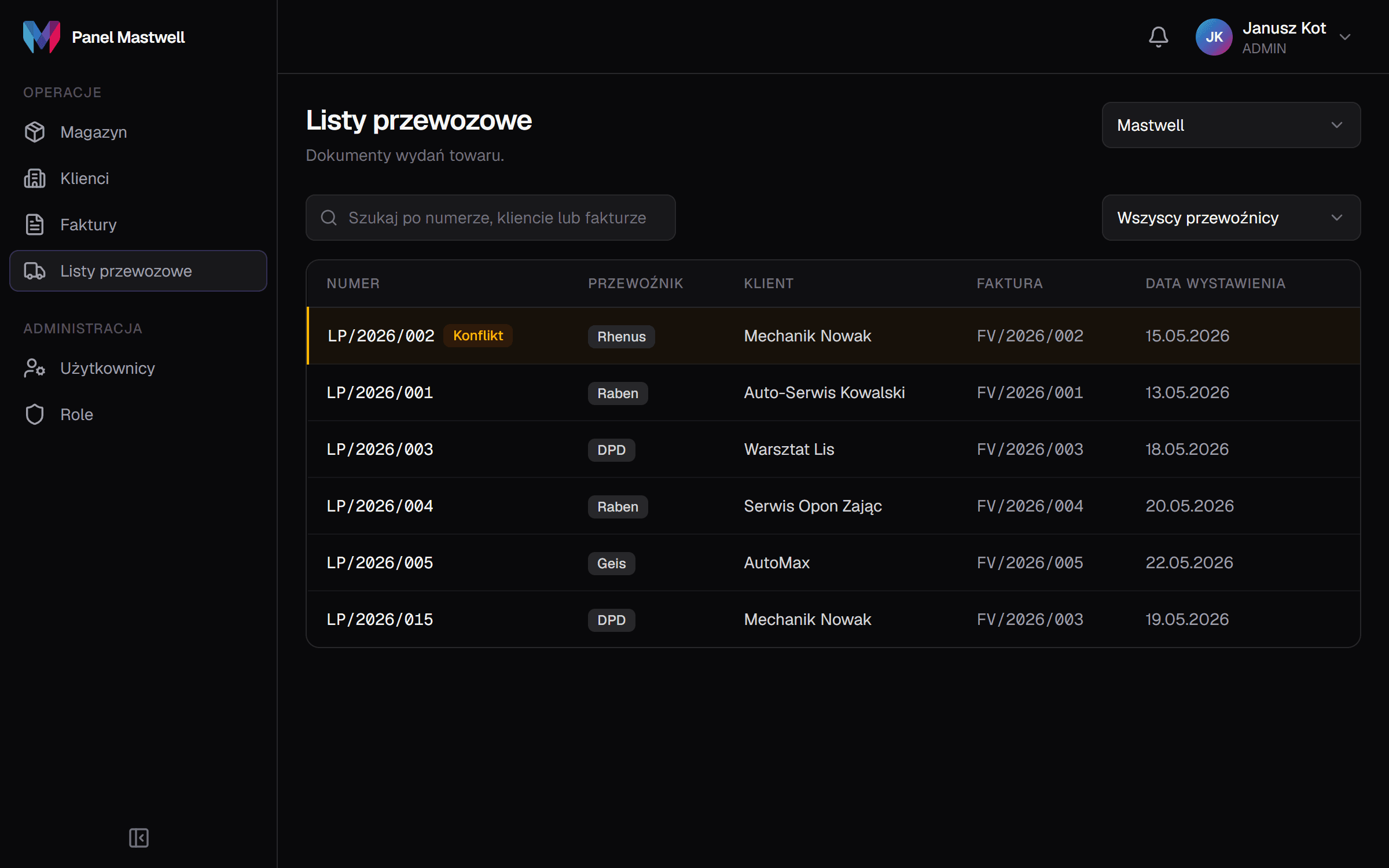
Waybill conflict resolution
A waybill linked to more than one invoice flags itself; resolving it requires a reason and leaves an audit trail.
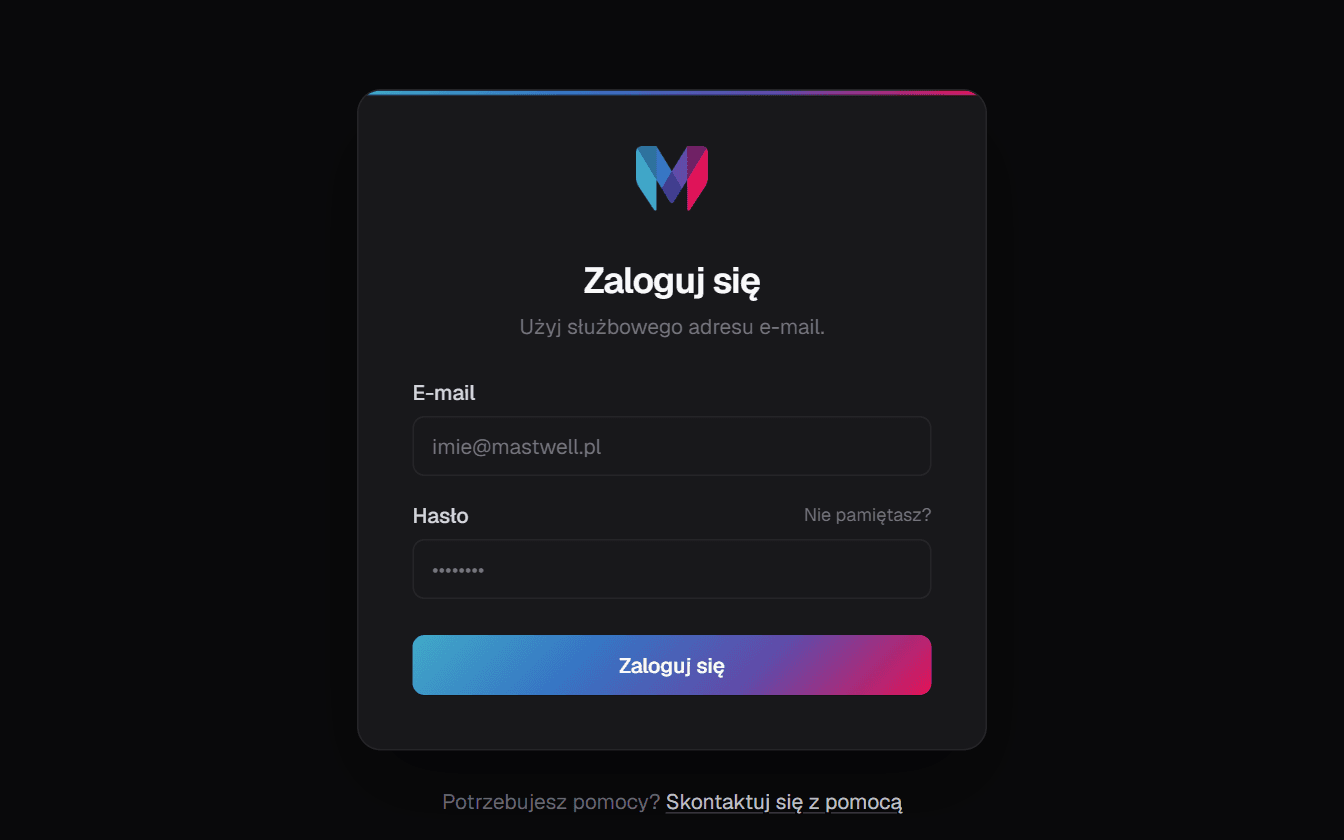
Auth done properly
Login with company-domain allowlist, invite and reset flows, password rules and optional 2FA with QR enrollment.
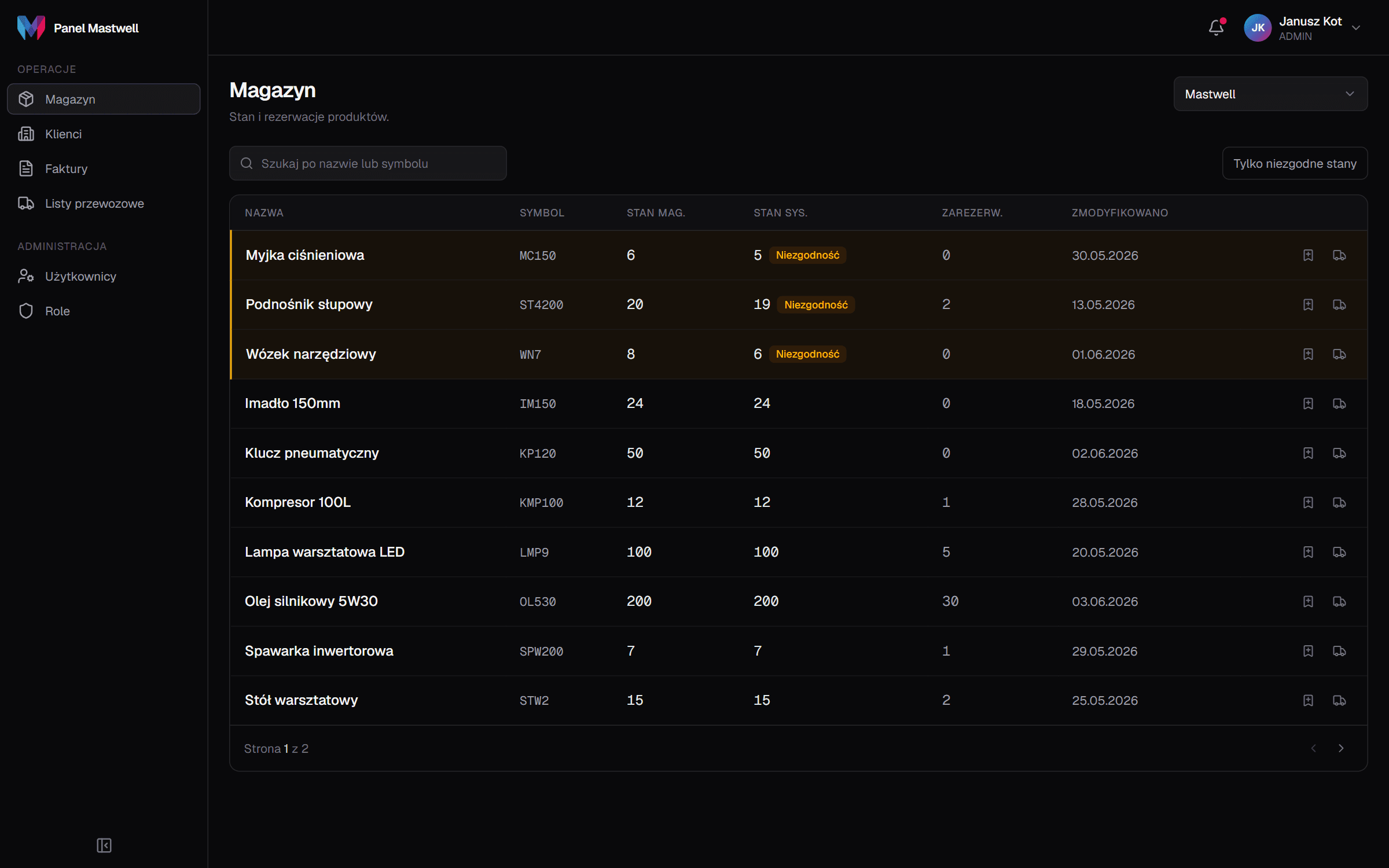
Warehouse with reservations
Stock levels, reservations and issues per product with full history — the difference between 'should be on the shelf' and 'is'.
Dual-mode development
The same app runs on a service-worker mock API or the real backend with zero code changes — the client clicks through real workflows before the backend exists.
More of the work.
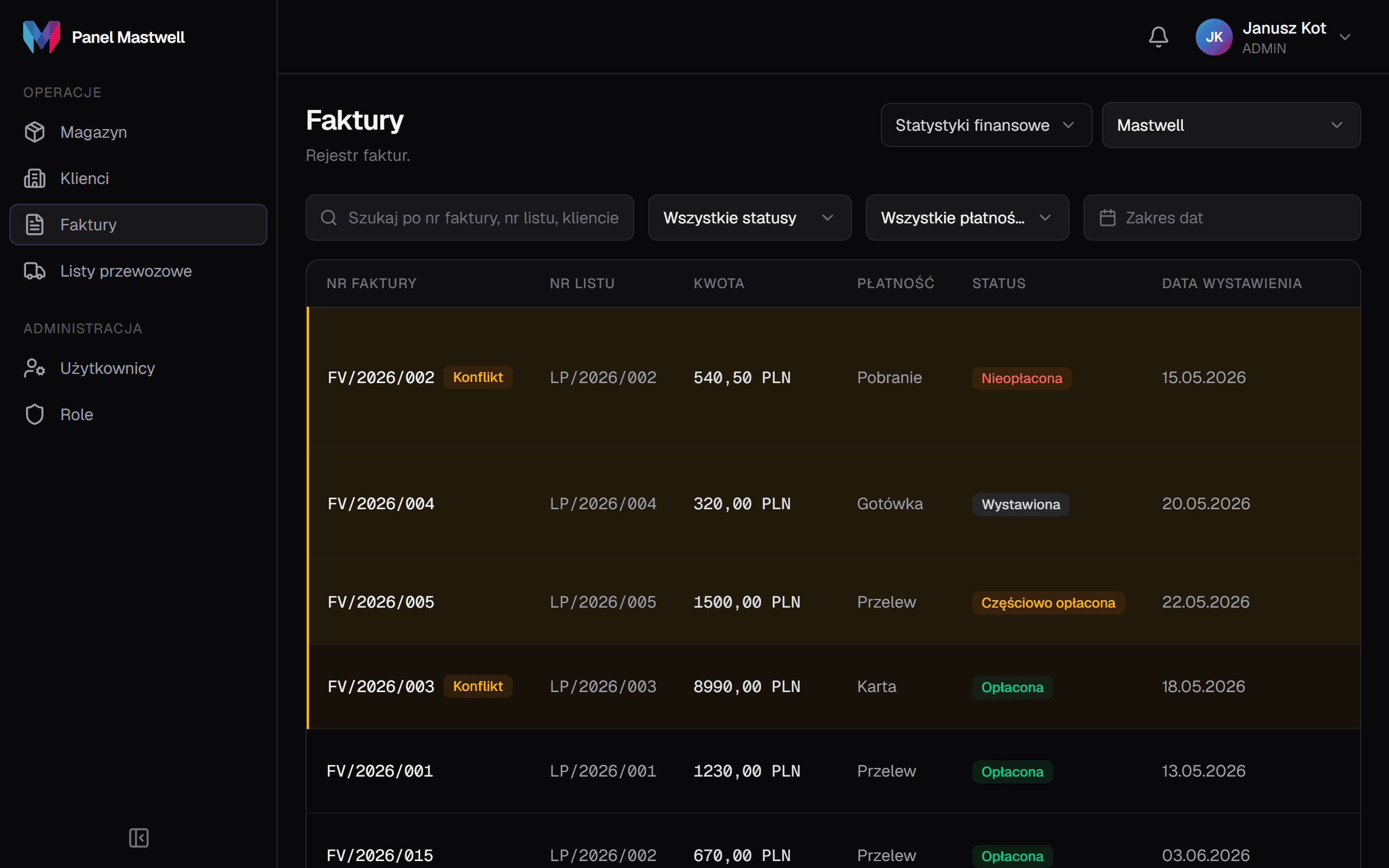
Invoices — payment statuses from unpaid to settled, with conflict flags carried over from waybills
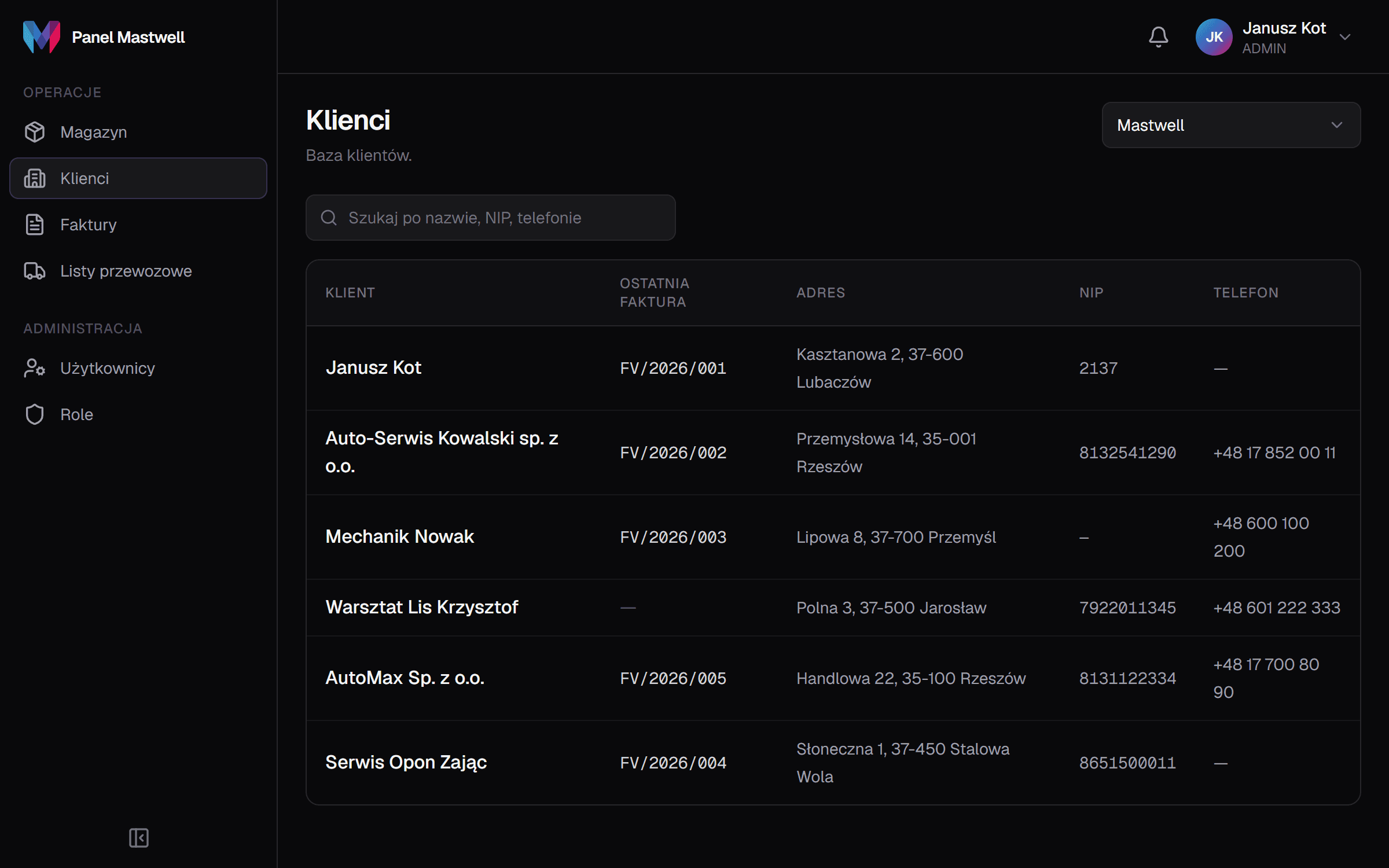
Clients — the customer base with NIP, addresses and each client's latest invoice
Role
- System design
- Full frontend build
- RBAC & auth flows
- Design system
Stack
- React 19
- TypeScript strict
- Vite
- TanStack Router · Query · Table
- Tailwind CSS 4
- Zod + react-hook-form
- MSW (dual-mode API)
- Vitest · Biome
Worth knowing
- Every module was specified first: thirteen approved design documents with matching implementation plans live in the repo.
- The design system is hand-built — thirteen primitives, dark-first, tokens in Tailwind 4 — no component kit.
- Proprietary engagement under the Qorion brand; shown with the client's logo pack.